
To Improve America's Problem-Solving Capacity, We Must Teach Critical Thinking in Schools
(But for Real This time)

The following is my entry for the Boyd Institute’s first essay contest of 2026, which is on the theme “How can America improve its problem-solving capacity?”
“There is only one good, knowledge, and only one evil, ignorance.”
Irrationality is the biggest problem that Americans1 collectively face, because irrationality is either the root cause or a major exacerbating factor of every other problem we collectively face. The proper solutions2 to housing, immigration, crime, falling fertility rates, various overseas threats, and all the other problems we face cannot be found because our “thinking” about these problems is distorted by a complicated web of fallacies, misconceptions, dogmatism, and tribal/personality-cult logic. Plus, a nice helping of mathematical, scientific, and historical illiteracy. Oh and some regular illiteracy too. Panaceas do not exist, but solving the problem of irrational thinking will get us closer to a solution for literally everything else.
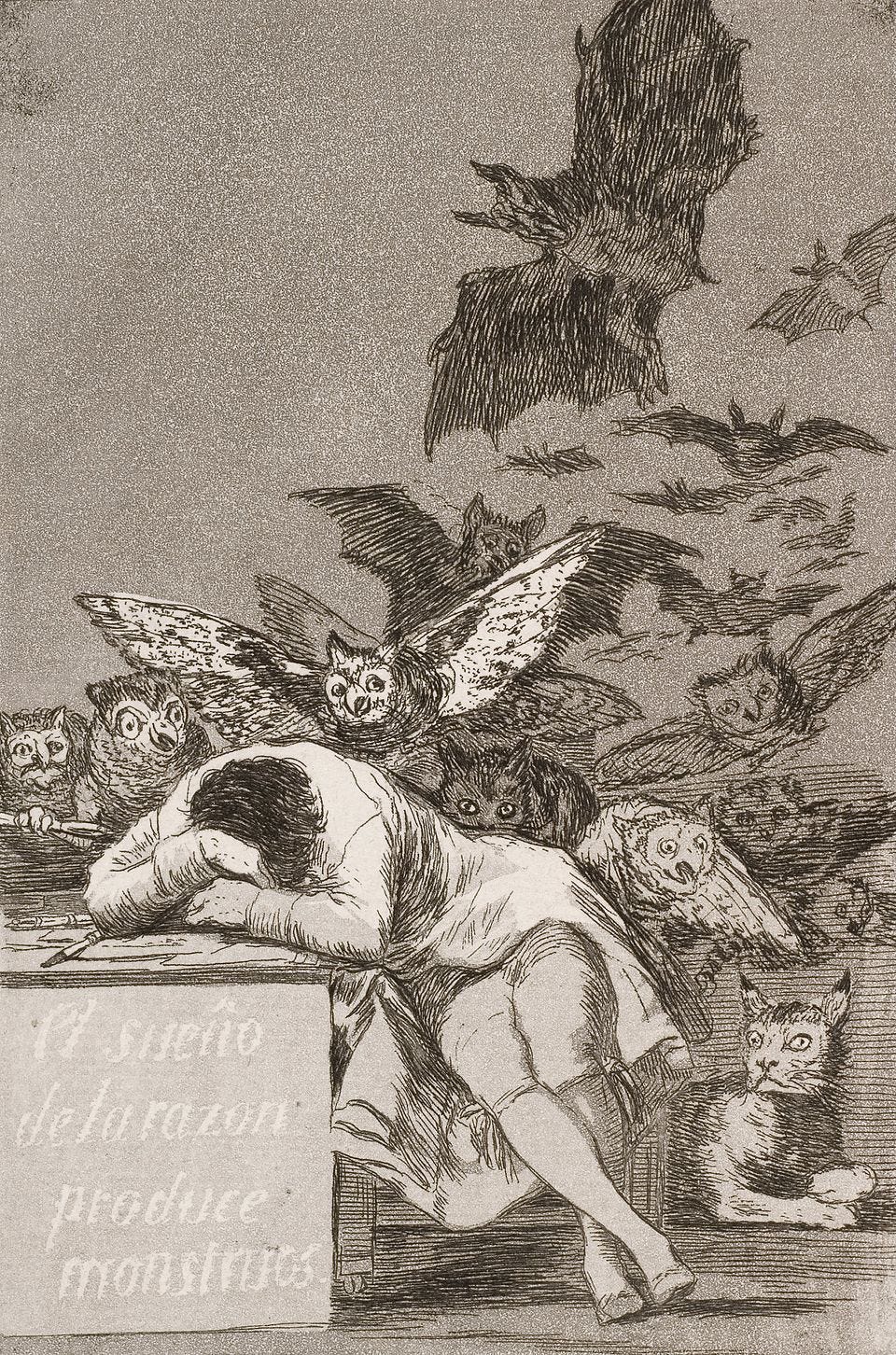
The problem of American irrationality goes much deeper than getting viewers of Fox News to watch more MSNBC and vice versa. I suspect that even if we could do that, it would just confirm people in their previously held opinions by exposing them to the silliest and least intellectually compelling versions of the opposing argument. Indeed, there is probably little we can do to fix the bad mental habits of the country’s adult population. Instead, my proposal focuses on helping better educate the young people of America before they can become corrupted.
To save America, we must teach critical thinking in schools (but for real this time).
I say “but for real this time” because I am perfectly aware of how many previous failed attempts have been made at this, and I have some ideas for how this time can be different. And the first step to teaching critical thinking to children the right way is surprisingly simple: don’t teach critical thinking.
To understand what I mean by that, let us begin with a brief anecdote about how our current system so often teaches critical thinking the wrong way.
I can still remember back when I was in the 3rd grade, after we had finished our unit on the Revolutionary War, we were assigned to write an essay about what was the most important reason for the Patriot victory over the British. I think I picked “French assistance” as my reason, which is still probably the reason I’d give today, thus proving either that I am incapable of changing my mind or that I have amazingly sharp instincts. But looking back on that assignment, I’m appalled by the fact that the adults in the room thought we were capable of giving worthwhile answers to a question like that. Or maybe they knew we weren’t but decided to waste our time anyway.
Even if we had been at an age where we could theoretically think about such a complex topic intelligently, the school system had not adequately prepared us to do so in practice. Not even close. We knew nothing about the methods that a trained historian might use to analyze such a question. And we had read none of “the literature” as they say in academia. Our textbook basically told us “Some people say X was most important, others say Y was most important, still others claim the most important factor was Z.” But the most glaring problem was that even for the kids who had been paying attention, our understanding of the American Revolution was essentially surface level. We simply had no factual foundation with which to come up with a coherent answer. The discussion of foreign assistance to the American cause basically consisted of “the French were at Yorktown”. I don’t think Spanish and Dutch contributions were even mentioned. I’m sure the textbook told us George Washington was a charismatic leader of his men, but that’s about it with regard to his importance. We had no idea who Thomas Paine was or why he mattered. And we knew so little about history in general we could never ask questions such as “How were the British more successful in dealing with other colonial uprisings, and what, if any, relevance does that have for the American situation?
This was not an instance of “doing your own research”. This was closer to “Do basically no research at all and form an opinion anyway”.
So, what should the school system be doing instead? One of the basic problems we keep running into with teaching critical thinking as a general skill is that there is no such thing as thinking in general. There is only thinking about specific topics. And before one can think critically about any specific topic, one must have some general knowledge of the world and then specific knowledge about that domain. Thus, for the first several years, our school system should be obsessively focused on a content-rich curriculum that exposes the students to as much information as possible and gets it to stick in their heads.
Our current system does a terrible job of that now, and there is no shortage of reasons why. Part of it has to do with resistance to early ability grouping, which inevitably asks too little of the kids at the right end of the intelligence bell curve (my source for this is my own life). Part of it is arguably outside the control of the school system. But probably the biggest problem is that due to inertia, ignorance, and laziness, schools have failed to implement what educational psychologists have discovered about how the learning process genuinely works. How many times when you were in school did you hear a teacher talk about kids having “different learning styles”? Psychologists have long known that’s a myth. To take another egregious example, there is excellent evidence that regular (even daily) quizzes enhance learning. But they haven’t been implemented because they’re too much work for everyone involved.
The exact details of how to do this are best left to educational psychologists and are beyond the scope of this essay, indeed, multiple books could probably be written about this, but the basic concept is that when the kids are young, asking them to think about the big, difficult questions is a bit premature. Instead of being told to “make their voices heard”, young children need to first humbly accept instruction about the facts of life. To some degree, it is the job of the adults in the room to make those children acutely aware of how little they actually know. Only after many years of overcoming the profound state of ignorance into which all humans are born, can they be introduced to critical thinking instruction in the proper sense of the term.
The age at which this happens will depend on the capabilities of the individual child, but I suspect in a school system that is doing everything else right, it can begin around 7th or 8th grade for children of above average ability. This plan I emphasize does not envision having separate classes specifically devoted to critical thinking (though there are a few courses that I think need to be added to American school curricula). Rather, the goal is to incorporate an ethos of critical thinking into every specific subject. The precise meaning of this will vary from one class to another, but certain core principles will be ubiquitous.
One of those principles is that what students learn and think about should be focused on what is directly relevant to their lives as both citizens and individuals. In the hard sciences for instance, it is not possible and probably not even desirable to keep students abreast of the latest developments in string theory or other abstractions far-removed from “the real world”. The opportunity cost would simply be too high. With all the people out there promoting absolute nonsense about scientific topics with clear and profound real-world consequences, we have more urgent priorities to deal with. A significant minority of Americans (and a disturbingly large percentage of young women) still believe in astrology. Both the internet and your local bookstore are awash in hucksters promoting one fad diet after another. We have people pushing the idea that vaccines can kill you (which is technically accurate, but there are rare circumstances in which airbags can kill you too). We’re spewing coal dust into the air and panicking about nuclear power plants. And our school system leaves many people, even many people with high IQ’s, powerless to defend themselves from such propaganda when they encounter it as adults. Even most of the people who have the right views on these topics could not explain the science behind them if really pressed (this author included, though I think I would do a better job than histrionically shouting that people need to “trust the science”).
A hard sciences curriculum that emphasizes critical thinking should be focused on changing that. No school system can teach people everything that might be useful in their future adult lives. But it can and should try to inoculate people against the most common and dangerous types of pseudoscience and quackery they will encounter. I would advocate that science curricula throughout the nation have specific units and maybe even specific courses devoted to, for example, the science behind vaccines. Which brings me to another important principle of critical thinking: to refute bad ideas, you must first understand them.
Therefore, a course on the science of vaccines would involve reading the work of people like Andrew Wakefield and having the teacher carefully, systematically, and sympathetically explain what is wrong with their thinking. Then do the same for the diet gurus who think homo sapiens should subsist on cucumbers and raw beef liver. Given the harm done to our society by obesity and various fake solutions to it, that should be given a fairly high priority. If you have time, read the flat-earthers and the scientists from ancient Greece onward who refute them. And yes, every American should understand at a basic level the science behind different types of energy, along with their costs and benefits.

Besides covering specific types of pseudoscience, every student needs to have at least a basic foundation in the history and philosophy of science. Let’s look at one example of how this might be helpful. The “Big Pharma/Ag is killing you” crowd will often insist that you should always check who funded a study before you choose to believe it. And that’s a perfectly correct principle of epistemology. But the history of science reveals to us that giant corporations are not the only kind of special interest group out there trying to make money. And for the benefit of those students who already believe in “trusting the science”, it would be helpful to talk about the replication crisis and the difference between science and scientism. Which is essential to knowing the difference between real expertise and fake expertise.
And of course, one of the most essential tools for navigating the rough waters of science is mathematics, particularly statistics. It is a scandal how little the school system tries to inculcate statistical knowledge into our students. The high school I went to had excellent math instructors, who did a great job of teaching us about trigonometry, Riemann sums, and the like. For my friends who went into engineering, this was no doubt a huge blessing. It was also a huge blessing for me, since I genuinely enjoyed all those classes3. But for the large majority of high school students who will not be entering STEM fields, statistics and probability will be far more relevant in their adult lives, whether they’re making decisions about their health, their financial situation, or which political candidate to vote for. Opportunity cost is a concept that every person in charge of designing a curriculum must understand.
In addition to statistics, I think every American student should be required to receive some kind of formal instruction in logic. I’m essentially agnostic about whether logic should be a separate course or should be integrated into English classes, but it definitely should be taught. I acknowledge once again that due to opportunity cost that will inevitably mean deleting certain other things from the curriculum, but with all the nonsense we force on our overstretched students, I’m still in favor of it. I can say pretty definitively that being required to read The Secret Life of Bees my freshman year added nothing positive to my life. I also acknowledge that teaching logic can often go awry due to failure of learning transfer and other issues. But I believe it can be done right. We obviously don’t want to create more examples of the semi-professional internet arguer who thinks reciting lists of fallacies is an effective way to DESTROY one’s interlocutors. But maybe the proper solution to that is to educate people about the argumentum ad logicam fallacy.
Public policy is of course the domain where the American people’s collective irrationality does the most direct damage. Crafting a civics and social science curriculum that addresses it is of the utmost importance even compared to all the other vital changes that need to be made. But it will also probably be the hardest to get right.
In a well-functioning school system, everything the students learn about history, the hard sciences, math, logic, and literature would be integrated into their study of civics. Such a system therefore requires teachers who have broad and deep knowledge of these and ideally other subjects as well. True generalists, not either dilettantish pseudo-generalists or the kind of hyper-specialist all too common in modern academia. Such people are hard to find. Moreover, they need to not only be teachers with a great deal of knowledge, but also a great deal of integrity. We need teachers who have enough respect for the truth and enough humility to not turn the classroom into their own personal soap box. In other words, we need teachers who are willing to teach civics without ideological favoritism, unless you count a belief in the pursuit of truth through free speech and open inquiry an ideology. Given the realities of the teachers’ unions: their enduring political power, their utter amorality, and their deranged ideological beliefs, it will be hard to find such people in the current cohort of public school teachers. Quite frankly, having experienced both systems during my younger years, I have my doubts about the private school teachers too. But such people undoubtedly do exist. How to change the process of who gets hired to teach at the primary and secondary level is a massive topic in and of itself. But if we do succeed in finding a critical mass of such people, the following is a rough sketch of how I envision them teaching their classes.
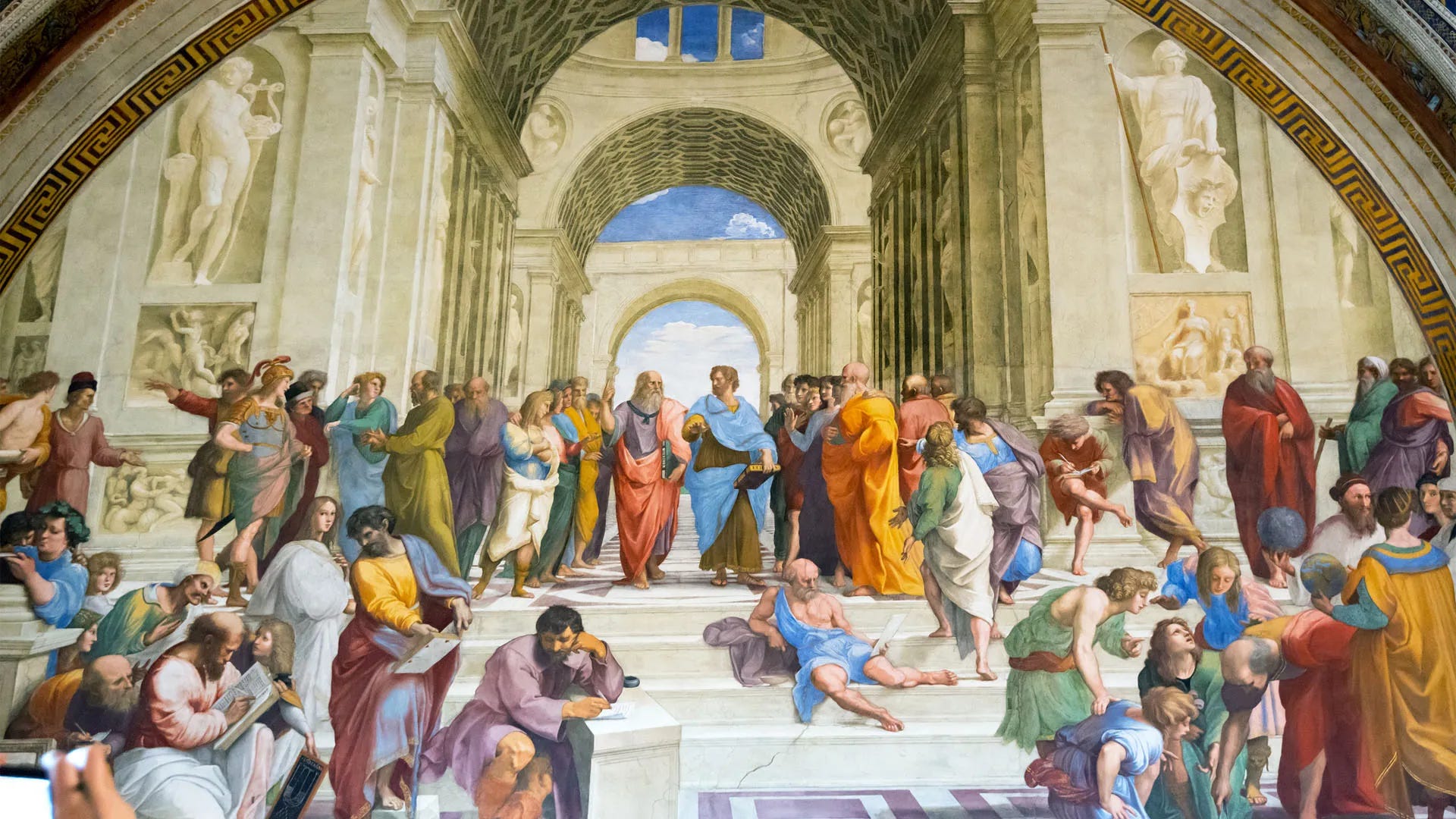
As with all subjects, the foundation of a critical thinking-focused civics curriculum is factual knowledge. All students should be required to read deeply and widely in history and political philosophy. It is probably best practice to have a list of canonical political works that every student reads in their first year or two, but beyond that list each student should be given a measure of freedom in choosing what specifically to study within the broad category of social studies. Nothing kills motivation to learn quite like boredom. But that freedom needs to be balanced with a very specific and strictly enforced rule: you must read things you disagree with. A good civics teacher doesn’t at all need to be friends with his pupils, but he does need to know what they believe. I envision that, at the beginning of each year, all the students will be required to fill out a comprehensive ideological survey about their beliefs. That will allow their teacher to assign them the proper material tailored to their individual needs.
So, for example, a left-wing student who was particularly interested in economic issues would be allowed and encouraged to read Marx and Lenin and even raving lunatics like Paul Krugman. But they would also have to read Bastiat, Friedman, and Sowell.
Another benefit of the ideological surveys will be facilitating debate, in both Socratic dialogue and more formalized formats, among the students. Either as individuals or as groups, the students in such a class will be expected to engage in frequent intellectual combat against each other. The students who are uncommitted on a particular issue will judge their performance, which in turn will influence their grades. It would also be good policy to grade them on their ability to pass an Ideological Turing test, that is to say, have occasional Devil’s advocate debates in which the students must defend viewpoints they reject. Have the leftist students argue against the minimum wage and have the right-wing students defend it, and then have each group judge the performance of the other team.
These classes (and all the others) will be run according to the spirit of the First Amendment. School rules will have to be relaxed so that pretty much anything that does not involve libel, threats, or revealing national security secrets is officially in bounds. I could see the case for not allowing direct ad hominem attacks, but there are a couple reasons why I would oppose such a policy. First, drawing the line between substantive intellectual critique and empty insult is highly subjective. Is calling someone a Finnophobe an ad hominem if you really believe their argument has racist implications towards Finns? It’s best not to have the class distracted by such imponderables. Moreover, subjective rules invite bias. Even a teacher who wants to be evenhanded will be tempted unconsciously to engage in differential enforcement with things like that. And perhaps most importantly, political debates in the grownup world involve a lot of casual insults and invective. So, it’s best if students thicken their skins early on and get used to that sort of thing.
And since I’m a big believer in the principle that betting is a tax on bullshit, I think it would be good if schools offered the Art and Science of Prediction as an elective class. Their textbook would be the work of Phil Tetlock and Nate Silver. Their homework would be going on the prediction markets to place bets on future events in the domestic and world arena. Their track record of right or wrong predictions at the end of the year will determine their grades. And for the benefit of students who aren’t motivated by watching their GPA go up or down, you might even give them 200 real dollars to either lose or grow. The desired effects of this are roughly as follows: A. Make the students aware of how hard it is to predict the future, B. Make them wary of pundits who make confident and wrong predictions and hope you’ll forget, and C. Make them wary of pundits who make Nostradamus-style predictions that are too vague to be testable.
Obviously, all of the above paragraphs have convinced my readers about the desirability of my proposal. But that still leaves open the question of its feasibility. It’s impossible to know in advance how much the notorious fadeout problem will affect these reforms. It is impossible to know in advance how many students will rise to the challenge of this style of learning. And since the existing educational bureaucracy is run by (far) left ignoramuses who want to work as little as possible, they will likely fight against it tooth and nail or try to subvert the proposal with covert bias. Taking over the schools of education first might be the only way to win the battle, rather than waging 10,000 campaigns at the level of the local school district. All things considered, my hope though is that this should be a relatively easy thing to persuade the American people of. My proposal explicitly does not call for propagandizing the children of the United States into accepting a particular set of ideas but instead training them in objective and general principles of thought. This should allow people of every ideological persuasion to favor it. Since everyone believes his own ideology is what informed and rational people believe, everyone will assume that making the populace more informed and rational will lead to the long-term triumph of his own viewpoints. The irrational among us will of course be disappointed when that does not happen, but since I am highly rational and informed about every issue, I obviously don’t have to worry about that.
This essay is focused on the United States, but my thesis probably applies to all human societies.
A problematic term, since as Tom Sowell has taught us, “There are no solutions, only trade-offs.” but I can’t think of a better one.
I am indeed a member of that strange subspecies of people who are not only good at mathematics but actually enjoy doing math for its own sake. In high school I successfully memorized pi to the 77th digit after the decimal point and can still recite it on command to the 51st.